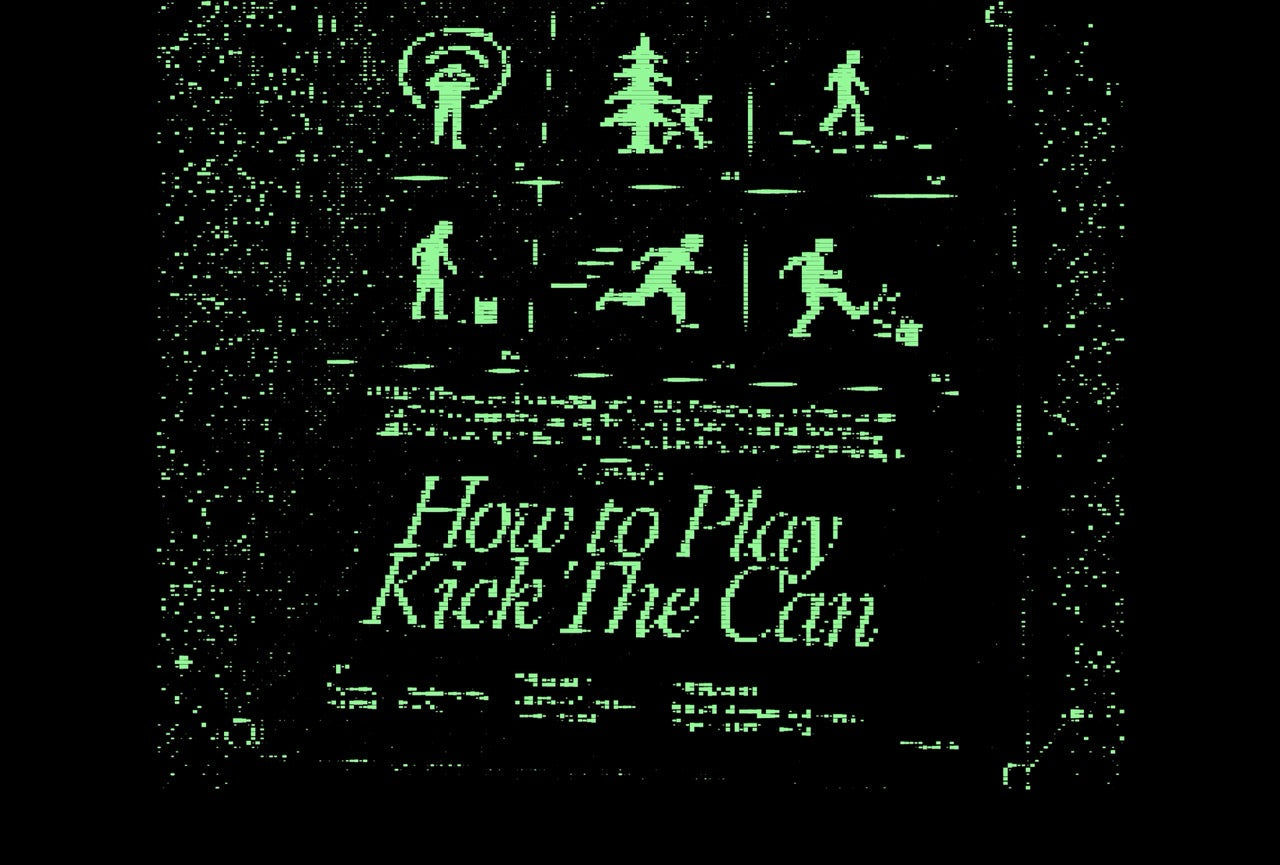
Hide, run, and kick the can.
This is a Japanese traditional play — "KANKERI" (缶蹴り).
The History of KANKERI
KANKERI is believed to have emerged from a combination of traditional Japanese games — hide-and-seek and tag.
While its exact origins remain unclear, the game became widely popular in its current form during the postwar period, particularly from the 1950s onward. As tin cans and other empty containers became common household items, it spread as a simple form of entertainment that required nothing more than a single can.
From the period of rapid economic growth through the late Showa era (1960s–80s), the game became established nationwide, alongside the rise of candy shops and public parks. Local variations in rules developed across regions, with unique elements such as the “all-player revival” rule becoming part of its appeal.
Today, with the decline of public play spaces and changes in children’s outdoor activities, opportunities to see the game in practice have gradually diminished.
How to play
The goal is simple: ONI (the seeker) protects the can. Players try to kick the can.
Full rules
- Draw a circle on the ground and place one empty can in the center.
- Choose one person to be ONI.
- One player kicks the can as far as possible.
- While ONI runs to get the can and puts it back in the circle, the other players hide behind buildings, trees, etc.
- ONI searches for the hidden players. When ONI finds someone, ONI must run back to the circle, step on the can, and shout: “I found you, [name]!”
- The caught player stays inside the circle.
- If ONI finds all players, ONI wins. If a player kicks the can before ONI calls out their name, the players win.